Life on Earth: CBSE Class 9 Geography practice questions
Practise 50 questions on Life on Earth, free, with an explanation for each answer.
Sample questions
The chapter imagines our planet as a giant patchwork quilt (a blanket made of many patches). Each patch is a biome. The word comes from the Greek word bios. What does bios mean?
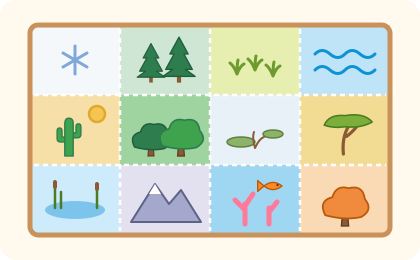
- Land
- Life
- Weather
- Water
Show the answer
B. Life
Bios means life, and -ome is a suffix used in biology for a group of a specific type of biological constituents. A biome is a large natural region where certain plants and animals live under similar climatic conditions, such as icy tundras, hot deserts, green forests and vast grasslands. Land, weather and water shape biomes, but none of them is the meaning of bios.
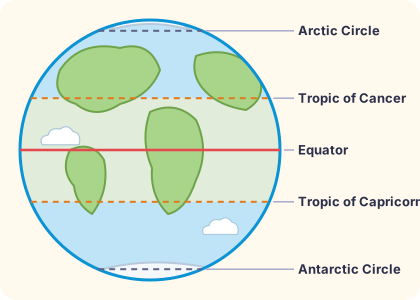
The Tropic of Cancer is at N and the Tropic of Capricorn is at S. Tropical rainforests are found in the belt between them. How many degrees of latitude wide is this belt?
Show the answer
D.
Latitudes on opposite sides of the Equator add up: Getting means subtracting as if both were on the same side; counts only one half of the belt; and () is the latitude of the Arctic and Antarctic Circles, not the width of the tropical belt.
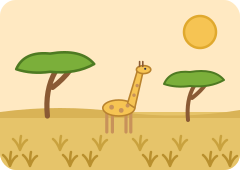
This grassland has scattered trees. Large animals such as lions, elephants and giraffes live here. What is it called, and where is the chapter's example of it found?
- Savanna, in Africa
- Prairie, in North America
- Steppe, in Asia
- Tundra, near the Arctic
Show the answer
A. Savanna, in Africa
Tropical grasslands, called savannas (as in Africa), have scattered trees and large animals like lions, elephants and giraffes. Prairies (North America) and steppes (Asia) are temperate grasslands with fertile soil, often used for farming. Grasslands grow where rainfall is moderate: not enough for dense forests. They support grazing animals, agriculture and livestock rearing.
Topics covered
- The Big Questions: what is a biome
- Biome and ecosystem
- Types of biomes: deciding factors
- Forest biome: where rainforests grow
- Forest biome: the tropical belt
- Forest biome: rainforest regions
- Forest biome: identifying a rainforest
- Forest biome: gene bank
- Forest biome: rainforest layers
- Taiga and temperate deciduous biomes
- Grassland biome
- Grassland and desert biomes: rainfall
- Desert biome: Rann of Kutch
- Desert biome
- Let's Explore: camels in two deserts
- Tundra biome: permafrost
- Tundra biome: adapted animals
- Distribution of biomes
- Aquatic biomes
- Biome pyramid
- Biomes by temperature and moisture
- Interconnectedness of biomes and living beings
- Biodiversity
- Hotspots of biodiversity
- Geography of biodiversity conservation
- Wildlife corridors
- Human–environment interaction
- Forest ecotourism
- Let's Explore: Thenmala
- Don't Miss Out: Swadesh Darshan 2.0
- Forests and livelihoods
- Think About It: sacred groves
- Forest dwellers and forest protection
- Geographical Indication (GI)
- GI-tagged forest products
- Challenges faced by people living in forests
- Think About It: forest fires
- Government efforts for forest dwellers
- Case study: Mendha Lekha
- Ecological commons
- Case study: commons-based fisheries in Bihar
- Case study: traditional water tanks
- Commons and forest rights: timeline