Reproduction: How Life Continues: CBSE Class 9 Biology practice questions
Practise 50 questions on Reproduction: How Life Continues, free, with an explanation for each answer.
Sample questions
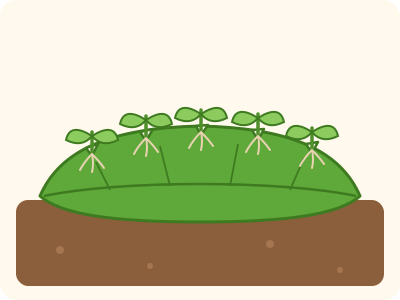
This thick leaf is lying on moist soil. Tiny new plants keep growing from the notches (small cuts) along its edge. What kind of reproduction is this?
- Spore formation
- Vegetative propagation
- Pollination
- External fertilisation
Show the answer
B. Vegetative propagation
A Bryophyllum leaf sprouts plantlets from its notches. When new plants grow from vegetative parts such as leaves, stems or roots, it is called vegetative propagation. Only one parent is involved, so the new plants are genetically identical to it. Spores are made by fungi, while pollination and fertilisation belong to sexual reproduction.
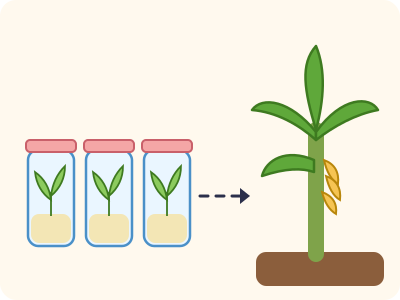
Banana farmers now get small plants (plantlets) that are grown in large numbers in laboratories. They are grown from the shoot tips of good plants. What is the main advantage?
- Each plantlet is a new variety with a mix of characters
- The plantlets need no water or soil after planting
- They are healthy, virus-free copies of a good plant, giving high yields
- The plantlets are produced by pollination inside the jars
Show the answer
C. They are healthy, virus-free copies of a good plant, giving high yields
Tissue culture grows huge numbers of plantlets from the shoot tip (apical meristem). It is asexual, so every plantlet is a genetically identical copy of the parent, and starting from healthy tissue helps remove virus-infected plants and ensures high yields. There is no pollination and no mixing of characters, and the plantlets still need water and soil.
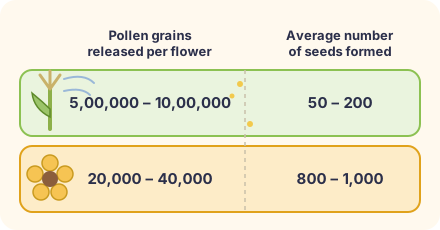
A sunflower releases 40,000 pollen grains and forms 1,000 seeds. The maize flower needed 5,000 pollen grains for each seed. About how many times more pollen grains per seed does the maize flower need than the sunflower?
- 40
- 25
- 125
- 4,960
Show the answer
C. 125
Sunflower: 40,000 ÷ 1,000 = 40 pollen grains per seed. Maize: 5,000 per seed. 5,000 ÷ 40 = 125 times. 40 is only the sunflower's ratio, 25 compares total pollen (10,00,000 ÷ 40,000) instead of pollen per seed, and 4,960 is a difference, not 'how many times'. Insects carry pollen straight to a stigma, so far less is wasted; wind plants make up for the waste by producing pollen in huge numbers.
Topics covered
- Vegetative propagation
- Grafting
- Layering
- Tissue culture
- Budding in yeast
- Budding in hydra
- Spore formation
- Uses of fungi
- Refrigeration and spoilage
- Mitosis and clones
- Meiosis and variation
- Parts of a flower
- Fruit formation
- Pea pollination experiment
- Self- and cross-pollination
- Pollinators
- Pollination strategies
- Fertilisation in plants
- Fruit and seed formation
- Seed dispersal
- Plant breeding
- Pollinators and crop yield
- External and internal fertilisation
- Larva and metamorphosis
- Male reproductive system
- Female reproductive system
- Gametes
- Gametogenesis and fertilisation
- Implantation
- Menstrual cycle
- Menstrual hygiene
- Sex determination
- Pregnancy
- Scientists and discoveries
- Contraception and STIs
- Reproductive health in society