Cell: The Building Block of Life: CBSE Class 9 Biology practice questions
Practise 50 questions on Cell: The Building Block of Life, free, with an explanation for each answer.
Sample questions
A microscope has a 10X eyepiece and a 40X objective lens. What is the total magnification?

- 4X
- 50X
- 4000X
- 400X
Show the answer
D. 400X
Total magnification X. An object looks 400 times larger than it really is. Adding the powers (50X) or dividing them (4X) are common slips.
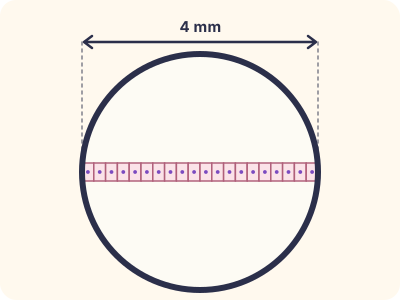
Through the eyepiece, the round field of view is 4 mm across. You count 20 onion peel cells in a straight line across it (along the diameter). Estimate the size of one cell.
- 0.2 µm
- 20 µm
- 200 µm
- 80,000 µm
Show the answer
C. 200 µm
Field diameter = 4 mm = µm. 0.2 µm comes from forgetting the unit conversion, and 80,000 µm from multiplying instead of dividing.
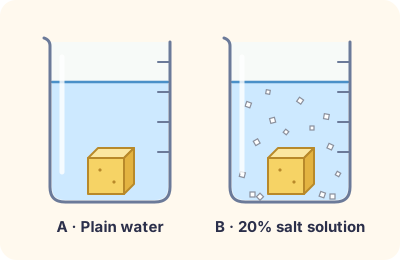
In the potato experiment, the piece in Beaker A weighed 50 g at the start and 56 g after an hour. By what percentage did its weight increase?
- 6%
- 10.7%
- 12%
- 112%
Show the answer
C. 12%
Plain water is less concentrated than the potato cells, so water entered the cells by osmosis and the piece gained weight. 6% is just the gain in grams, 10.7% divides by the final weight instead of the initial one, and 112% is the final weight as a percentage of the start.
Topics covered
- Nucleus
- Vacuoles
- Plastids
- Lysosomes
- Golgi apparatus
- Prokaryotic cells
- Mitochondria
- Light microscope
- Plant cell structure
- Cell organelles
- Scientists and discoveries
- Osmosis
- Levels of organisation
- Endoplasmic reticulum and Golgi
- Chromosomes and DNA
- Cell theory
- Cell division
- Estimating cell size
- Magnification
- Meiosis
- Limit of resolution
- Microscopes
- Observing cells
- Cell wall
- Cell membrane
- Cell growth and cancer
- Diffusion
- Prokaryotic and eukaryotic cells
- Osmosis in daily life
- Specialised cells
- Ribosomes
- Origin of life
- Cell death
- Totipotency
- Synthetic biology
- Plant and animal cells
- Mitosis
- Acellular agents
- Mitochondria and plastids