Political Parties: CBSE Class 10 Politics practice questions
Practise 50 questions on Political Parties, free, with an explanation for each answer.
Sample questions
Which of the following best defines a political party?
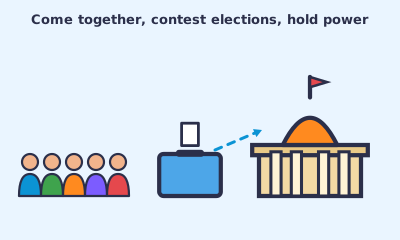
- A group of citizens who put pressure on the government without contesting elections
- An organisation of officials who run the administration permanently
- A group of people who come together to contest elections and hold power in the government
- A group of people who live in the same region and speak one language
Show the answer
C. A group of people who come together to contest elections and hold power in the government
A political party is a group of people who come together to contest elections and hold power in the government. They agree on policies and programmes meant to promote the collective good. Pressure groups do not contest elections, and officials are not elected through parties.
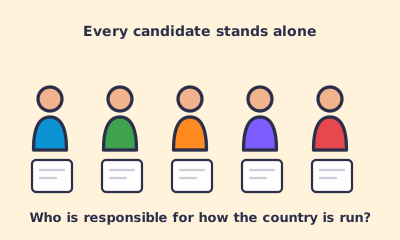
Imagine that every candidate in an election is an independent (not from any party). Which problem does the chapter point out?
- Elections are held in only one constituency
- No one is responsible for how the country will be run, and no major promises of policy change can be made
- Voters can no longer vote in secret
- Candidates become accountable to the whole country instead of their locality
Show the answer
B. No one is responsible for how the country will be run, and no major promises of policy change can be made
Without parties, nobody can promise major policy changes and the government's utility is uncertain. Representatives are accountable to their constituency for local work, but no one is responsible for the country as a whole. The other options are not claimed in the chapter.
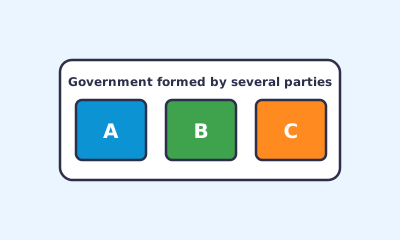
For many years before 2014, national parties were forced to form alliances with State parties. Why?
- State parties had been banned earlier
- No national party could win a majority alone
- The Election Commission required alliances
- Alliances were needed to register a party
Show the answer
B. No national party could win a majority alone
The number and strength of State parties grew, making Parliament more diverse. No one national party could win a majority on its own until 2014, so national parties had to form alliances, which strengthened federalism and democracy.
Topics covered
- Meaning and components
- Party systems
- Functions of political parties
- Necessity of parties
- Participation in parties
- National and State parties
- Challenges to political parties
- Reforms of political parties