Gender, Religion and Caste: CBSE Class 10 Politics practice questions
Practise 50 questions on Gender, Religion and Caste, free, with an explanation for each answer.
Sample questions
When the chapter speaks of gender division, what does it mean?
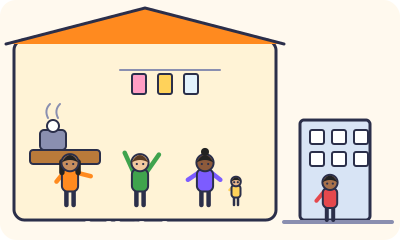
- The unequal roles that society assigns to men and women
- The biological difference between men and women
- The unequal child sex ratio in the country
- The absence of voting rights for women in democracies
Show the answer
A. The unequal roles that society assigns to men and women
Gender division is a hierarchical social division based on social expectations and stereotypes, not on biology, so the first option is right. Biological difference is a different thing; the child sex ratio is only one result of unequal treatment; and in most democracies women now have voting rights.
In the time use survey (hours:minutes), men spent 6:00 on income-generating work and 0:30 on household work. Women spent 2:40 on income-generating work and 5:00 on household work. How much longer does an average woman work in a day than an average man?
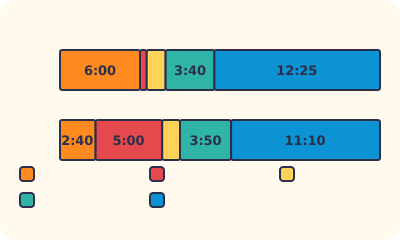
- 1 h 10 min
- 3 h 20 min (income work only)
- 4 h 30 min (household work only)
- 1 h 15 min (sleep time only)
Show the answer
A. 1 h 10 min
Men: 6:00 + 0:30 = 6 h 30 min. Women: 2:40 + 5:00 = 7 h 40 min. The difference is 1 h 10 min, which the chapter rounds to "one hour more". Comparing only income work gives 3 h 20 min (and in the wrong direction), only household work gives 4 h 30 min, and the sleep gap of 1 h 15 min is not work at all.
Gandhiji said religion can never be separated from politics. According to the chapter, what did he mean by "religion"?

- The practices of one particular religion that the rulers belong to
- Moral values that inform all religions, which should guide politics
- Rule by religious leaders in government
- Support of one religious community for a political party
Show the answer
B. Moral values that inform all religions, which should guide politics
The chapter says he meant moral values that inform all religions, not any particular religion such as Hinduism or Islam, and believed politics must be guided by ethics drawn from religion. He did not ask for rule by religious leaders or for backing one community.
Topics covered
- Gender division
- Sexual division of labour
- Women and work
- Time use survey
- Women in legislatures
- Women and education
- Child sex ratio
- Reservation for women
- Women's Reservation Act, 2023
- Discrimination against women
- Key terms on gender
- Gender and politics
- Religion and politics
- Communalism
- Forms of communalism
- Religious diversity of India
- Secular state
- Communal thinking
- Key terms: people and beliefs
- Caste inequalities
- Caste today
- Social and religious diversity
- Caste inequality today
- Caste in politics
- Key terms on caste
- Politics in caste and caste in politics