Sectors of the Indian Economy: CBSE Class 10 Economics practice questions
Practise 50 questions on Sectors of the Indian Economy, free, with an explanation for each answer.
Sample questions
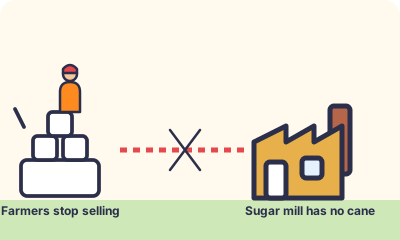
Imagine that farmers refuse to sell sugarcane to a particular sugar mill. So the mill has to shut down (close). What does this show?
- The primary sector depends on the secondary sector for its machines
- The tertiary sector depends on the primary sector for loans
- The three sectors work independently of one another
- The secondary (industrial) sector depends on the primary sector for raw material
Show the answer
D. The secondary (industrial) sector depends on the primary sector for raw material
The mill is a secondary activity that needs a primary product, sugarcane, as raw material. Without it the mill stops. The other statements describe other links (such as farmers buying fertilisers and pumpsets) that are not what this example shows. Economic activities are highly interdependent.
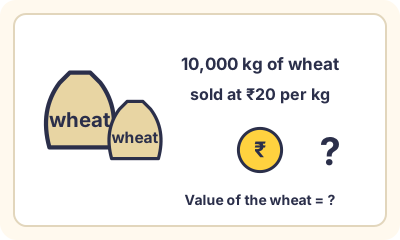
Economists count production using values, not quantities. Suppose 10,000 kg of wheat is sold at ₹20 per kg. What is the value of the wheat?
- ₹2,00,000
- ₹20,000
- ₹10,020
- ₹500
Show the answer
A. ₹2,00,000
Value = 10,000 kg × ₹20 = ₹2,00,000 (the chapter's own example). The wrong options come from slips: ₹20,000 drops a zero, ₹10,020 adds the quantity and the price, and ₹500 divides the quantity by the price instead of multiplying.
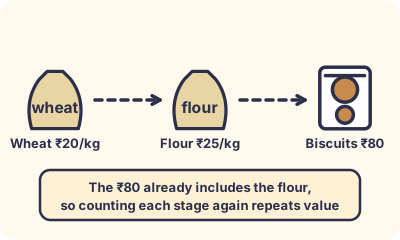
Why are only final goods and services counted when we measure a country's production?
- Intermediate goods have no value at all
- Intermediate goods are produced only by the government
- A final good's value already includes its intermediate goods
- It is easier to count a small number of goods than a large number
Show the answer
C. A final good's value already includes its intermediate goods
The ₹80 for the biscuits already includes the flour (and other inputs). Counting wheat, then flour, then biscuits would be double counting. Intermediate goods do have value; that value is simply already inside the final price.
Topics covered
- Secondary sector
- Tertiary sector
- Three sectors
- Linked sectors
- Interdependence
- Counting production
- Final goods
- GDP
- GVA
- GVA data
- Production in India
- Historical change
- Rise of services
- Employment shares
- Output and jobs
- Employment and GVA
- Underemployment
- Disguised unemployment
- Creating employment
- MGNREGA
- Problems of farming
- Organised and unorganised
- Organised sector
- Classifying sectors
- Protecting workers
- Public and private sectors
- Role of government