Consumer Rights: CBSE Class 10 Economics practice questions
Practise 50 questions on Consumer Rights, free, with an explanation for each answer.
Sample questions
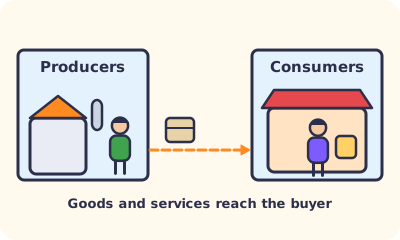
We take part in the market both as producers and as consumers. When does a person take part in the market as a consumer?
- When she makes goods and services in agriculture, industry or services
- When she purchases the goods and services she needs, which are the final goods people use
- When she frames the rules and regulations that traders must follow
- When she sells raw materials to a factory for further production
Show the answer
B. When she purchases the goods and services she needs, which are the final goods people use
The chapter says consumers participate in the market when they purchase goods and services that they need, and these are the final goods that people use. Making goods in any sector is the role of a producer, and framing rules is the task of government, so those options describe other roles.
According to the chapter, when do markets not work in a fair manner?
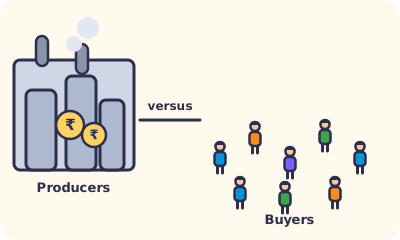
- When producers are few and powerful while consumers buy in small amounts and are scattered
- When many small producers compete and consumers can compare their products
- When the government fixes rules for sellers and checks that they are followed
- When consumers form groups and press sellers to correct unfair conduct
Show the answer
A. When producers are few and powerful while consumers buy in small amounts and are scattered
The chapter says markets are unfair when producers are few and powerful and consumers purchase in small amounts and are scattered. Large companies with huge wealth and reach can then manipulate the market, for example through false information. Competition, government rules and consumer groups are the remedies the chapter describes, not the causes of unfairness.
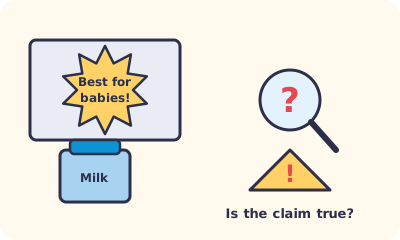
For years, a company sold baby milk powder as the most scientific product, better than mother's milk. It took years of struggle to make the company accept that these claims were false. Cigarette companies also had to be forced through court cases to accept that their product could cause cancer. What do these examples show?
- Consumers can easily verify every claim, so rules for sellers are not needed
- Powerful companies can spread false information, so rules are needed to protect consumers
- Companies accept false claims quickly once individual buyers complain
- Only small shopkeepers, never large companies, mislead consumers
Show the answer
B. Powerful companies can spread false information, so rules are needed to protect consumers
The chapter uses these cases to show that large companies with huge wealth, power and reach can manipulate the market by passing on false information, and that it took long battles to make them admit it. Hence there is a need for rules and regulations to protect consumers. Options saying consumers can easily check claims or that companies quickly admit mistakes contradict the 'years of struggle' in the text.
Topics covered
- The consumer in the marketplace
- Unfair trade practices
- Why markets can be unfair
- Weak position of the consumer
- Consumer movement
- False information and regulation
- Origin of the consumer movement
- Consumers International
- Taking the movement forward
- Laws and guidelines
- Right to safety
- Right to information
- Right to information: MRP
- Right to information: RTI
- Right to choose: Abirami's case
- Right to choose
- The six consumer rights
- Right to redressal
- Consumer Commissions
- The path to justice: Prakash's case
- The path to justice
- Consumer protection councils and Commissions
- The path to justice: Arita's case
- Consumer protection councils
- Where to get justice
- Standards and institutions
- Quality marks and standards
- Becoming well-informed consumers