Life Processes: CBSE Class 10 Biology practice questions
Practise 50 questions on Life Processes, free, with an explanation for each answer.
Sample questions
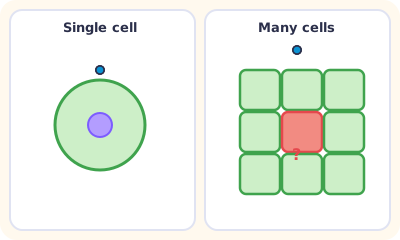
A human is a large multi-cellular organism. Why is simple diffusion not enough to meet its oxygen needs?
- Oxygen is not soluble in body fluids at all
- Many cells are not in direct contact with the surroundings, so oxygen would reach them far too slowly
- Diffusion works only for carbon dioxide, not for oxygen
- Cells in multi-cellular organisms do not need oxygen
Show the answer
B. Many cells are not in direct contact with the surroundings, so oxygen would reach them far too slowly
In a single-celled organism the whole surface touches the environment, so diffusion is enough. In a large body most cells are far from the surface, so simple diffusion cannot supply them. That creates the need for specialised organs and a transport system. Oxygen does dissolve and diffuse, and cells certainly need it, so the other options are false.
What is the role of hydrochloric acid in the stomach?
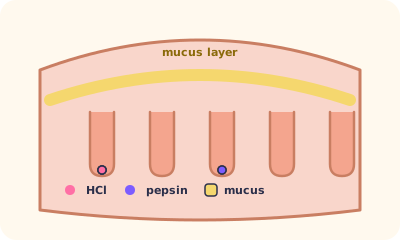
- It creates an acidic medium that helps the enzyme pepsin to act
- It digests fats into fatty acids
- It makes the food alkaline
- It protects the stomach lining from digestion
Show the answer
A. It creates an acidic medium that helps the enzyme pepsin to act
Hydrochloric acid creates the acidic medium in which pepsin, the protein-digesting enzyme, works best. Mucus, not the acid, protects the stomach lining. Fats are digested later in the small intestine, where the food is made alkaline (by bile), not in the stomach.
Two plants were kept in the dark. Then they were placed under bell-jars in sunlight. Jar (a) had a watch-glass of potassium hydroxide (KOH). Jar (b) had no KOH. Which leaf shows more starch, and why?
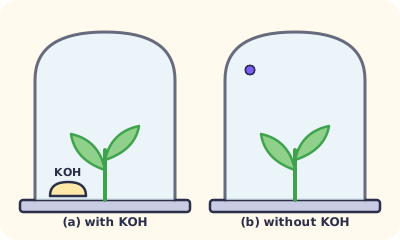
- Leaf (b), because KOH in jar (a) absorbs carbon dioxide so less photosynthesis happens there
- Leaf (a), because KOH adds nutrients
- Both the same, because starch forms in the dark
- Leaf (a), because KOH absorbs oxygen
Show the answer
A. Leaf (b), because KOH in jar (a) absorbs carbon dioxide so less photosynthesis happens there
KOH absorbs carbon dioxide. The plant in jar (a) has no CO2, so it cannot photosynthesise and makes little or no starch. The plant in jar (b) has CO2 and makes starch. This shows that carbon dioxide is essential for photosynthesis.
Topics covered
- What are life processes?
- Are viruses alive?
- Why diffusion is not enough
- Autotrophic nutrition
- Steps of photosynthesis
- Stomata
- Activity 5.1: starch test
- Activity 5.2: need for CO2
- Stomata and guard cells
- Nutrition in Amoeba
- Heterotrophic strategies
- Activity 5.3: saliva and starch
- Human alimentary canal
- Digestion in the stomach
- Digestive glands
- Bile and fat digestion
- Digestive enzymes
- Length of the small intestine
- Absorption in the small intestine
- Villi
- Path of food
- Dental caries
- Activity 5.4: CO2 in exhaled air
- Anaerobic respiration
- Pathways of glucose breakdown
- Aerobic and anaerobic respiration
- Lactic acid and cramps
- Gas exchange in plants
- Breathing in water
- Human respiratory system
- Mechanism of breathing
- Haemoglobin
- Blood plasma
- The human heart
- Types of hearts
- Double circulation
- Blood vessels
- Transport tissues
- Blood pressure
- Transport of water
- Activity 5.8: transpiration
- Translocation in phloem
- Xylem and phloem
- Nephron
- Human excretory system
- Filtration and reabsorption
- Artificial kidney
- Excretion in plants