State and Society up to 1000 CE: CBSE Class 9 History practice questions
Practise 50 questions on State and Society up to 1000 CE, free, with an explanation for each answer.
Sample questions
The Ṛigveda and Atharvaveda name several assemblies. Which one was a smaller body of select elites (a few chosen, important people) whose main work was judicial (giving justice)?

- Samiti
- Sabhā
- Vidhata
- Mantri-pariṣhad
Show the answer
B. Sabhā
The sabhā was a smaller body of select elites with a mainly judicial role. The samiti was a larger assembly that represented the broader population and dealt with policy and political affairs. The vidhata was a popular gathering of the janas where warfare and other political matters were discussed. The mantri-pariṣhad (council of ministers) belongs to the later kingdoms, not to the Vedic assemblies.
Janapada literally means the place where a jana (people) first set its feet. What change does this word point to?
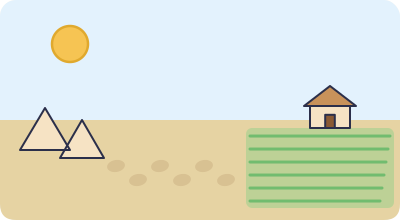
- From territorial identity to kinship-based identity
- From monarchies to republics
- From kinship-based identity to territorial identity
- From farming to hunting and gathering
Show the answer
C. From kinship-based identity to territorial identity
Between about 1000 BCE and 600 BCE, people came to be bound not only by kinship but also by a sense of belonging to a land. So the change was from kinship-based to territorial identity. Control over land, farm produce and trade routes then became important, and administration grew more complex. Option A gets the direction backwards.
Suppose Aśhoka's edicts on the Junagadh rock date to about 250 BCE, and Skandagupta's record to about 455 CE. Roughly how many years of history does this one rock cover?

- About 205 years
- About 705 years
- About 455 years
- About 250 years
Show the answer
B. About 705 years
From 250 BCE to the zero line is 250 years, and from there to 455 CE is another 455, so years. That matches the chapter's 'about 700 years'. (There is no year 0, so the exact count is 704, which still rounds to about 700.) 205 comes from subtracting as if both dates were CE, 455 ignores the BCE part, and 250 ignores the CE part.
Topics covered
- Society and the State
- The four Vedas
- Janas of the Ṛigveda
- Vedic assemblies
- Janapadas
- Growth of political units
- Mahājanapadas
- Rise of Magadha
- Iron and the Ganga region
- Pottery and material culture
- Kingdoms of Tamilakam
- Reading a BCE–CE timeline
- Years between events
- Duties and ideals of the king
- Nature of kingship
- Pan-Indian political ideal
- Saptāṁga
- Council of ministers
- Junagadh rock inscription
- How empires were administered
- Chola administration
- Duration of a dynasty
- Land grants and local bodies
- Tri-partite struggle
- Uttaramerur inscription
- Chola village assemblies
- Dharma
- Ethical ideas
- Varṇa and occupations
- Emergence of jātis
- Social mobility
- Family and society
- Āśhramas
- Puruṣhārthas
- Role of women
- Bhakti
- Education and the gurukula
- Literary heritage
- Land revenue
- Trade routes and ports
- Guilds as banks
- Guilds and art
- Guilds