Resistance and Resilience (1000–1700 CE): CBSE Class 9 History practice questions
Practise 50 questions on Resistance and Resilience (1000–1700 CE), free, with an explanation for each answer.
Sample questions
The wall holds back an attack. The young plant keeps growing out of hard rock. The chapter says resistance and resilience are closely linked. Which statement best explains the link?

- Resistance always means open warfare on a battlefield
- Resilience lets communities endure hardship, and that endurance is what keeps resistance going
- Resistance is possible only for a kingdom with a very large army
- Resilient societies avoid every form of conflict
Show the answer
B. Resilience lets communities endure hardship, and that endurance is what keeps resistance going
Resistance means actively opposing a force or threat to protect political power, territory, interests or cultural identity, and it can take the form of warfare, alliances, diplomacy or negotiation, so A is too narrow. Resilience is the capacity to survive, adapt and preserve inherited traditions in hard times. A political cause or leadership creates the condition for resistance, but the ability to endure comes from resilience, which is why resilience is called the backbone of resistance. C and D contradict the chapter's many examples of kingdoms and communities that resisted for centuries.
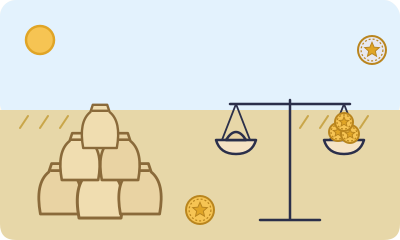
Under Alauddin Khiljī and Muhammad bin Tughlaq, the land tax went up to as much as 50 per cent of the total produce. Other taxes were charged on top of this. A peasant harvests 140 maunds of grain. The land tax takes 50%, and other taxes take another 10 maunds. How much grain is left with the peasant?
- 60 maunds
- 70 maunds
- 80 maunds
- 126 maunds
Show the answer
A. 60 maunds
Land tax maunds, so the peasant keeps maunds. 70 forgets the other taxes; 80 adds the 10 maunds instead of subtracting them; 126 uses 10% instead of 50%. Land revenue was the state's main source of income, and the chapter notes that its collection became increasingly strict and exploitative.
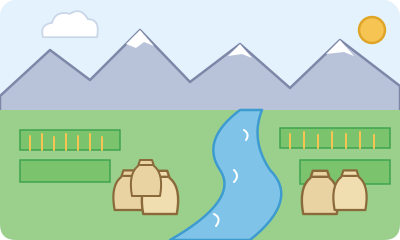
From the 7th century onwards, the subcontinent faced one invasion after another. These invasions were driven by the wish to gain more territory and by religious motives. Which economic reason does the chapter give as another major reason for the invasions?
- Oil deposits along the western coast
- The arrival of European trading companies
- Surplus farm produce of fertile plains fed by perennial rivers
- Silver mines found only in peninsular India
Show the answer
C. Surplus farm produce of fertile plains fed by perennial rivers
The surplus agrarian produce of fertile plains watered by perennial rivers gave people economic well-being, and it also became a major reason for the invasions. European companies arrived only from the 16th century, long after the invasions began. From the mid-7th century, Arab forces invaded by sea and land and were repulsed by rulers across the Deccan, Malwa, Kashmir and Rajasthan.
Topics covered
- Resistance and resilience
- Why invasions came
- Invasions and resistance, 11th–12th centuries
- Resisting the Delhi Sultanate
- Land revenue burden
- Sultanate campaigns, 1298–1307
- Span of the Delhi Sultanate
- Timeline of the period
- Rajput–Mughal relations
- Forts and defence
- Mewar's resistance
- Guerrilla warfare
- Let's Explore: Dursā Arhā
- Mewar's treaty with the Mughals
- Leaders of resistance
- Ahom endurance
- Ahom navy
- Ahom strategy
- Vijayanagara Empire
- Vijayanagara and Madurai
- Rise and fall of Vijayanagara
- Nāyaka defiance
- Maratha forts
- Design a fort
- Gingee (Senji) Fort
- Sikhs: mīrī-pīrī
- Sikh history
- Jat resistance
- Bhakti and resilience
- Bhakti literature
- Streams of Bhakti
- Women in the Bhakti tradition
- Sufism
- Key terms
- Temples as institutions
- Havelī temples
- Restoring sacred sites
- Merchants and finance
- Inland trade networks
- Kṛiṣhṇadevarāya on trade
- Europeans in the Indian Ocean
- Coastal commerce
- Economy and resilience
- Centuries and dates