Early Humans and Beginning of Civilisation: CBSE Class 9 History practice questions
Practise 50 questions on Early Humans and Beginning of Civilisation, free, with an explanation for each answer.
Sample questions
Some old seals and pots have the signs of an early script. Scholars still cannot read this script. Which script is it?
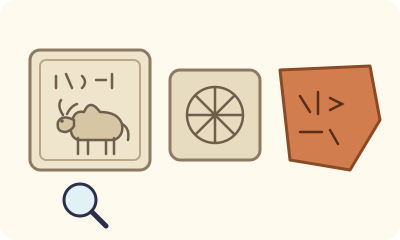
- The cuneiform script of the Sumerians
- The hieroglyphic script of ancient Egypt
- The Harappan script, also called Sindhu lipi
- The logographic script of the Chinese
Show the answer
C. The Harappan script, also called Sindhu lipi
The Harappans wrote in a pictographic script found on seals and pottery, but it has not been deciphered, so we still cannot read the Harappan script (Sindhu lipi). Sumerian cuneiform and Egyptian hieroglyphs flourished at about the same time but have been deciphered, and their records mark the start of the historical period, about 5000 years ago. Chinese characters, too, can be read today.
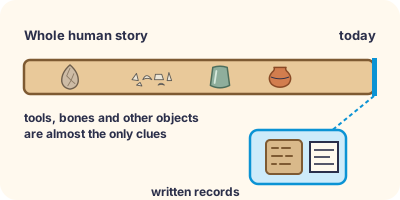
Human history goes back about 30 lakh (3 million) years, but writing began only about 5000 years ago. Roughly what percentage of human history comes after writing?
- About
- About
- About
- About
Show the answer
A. About
This is why the chapter says less than 1 per cent of human history has written records, while more than 99 per cent is known only from artefacts. and come from slipping a power of ten (dropping zeros from 30 lakh), and comes from dividing the whole by the part instead of the part by the whole.
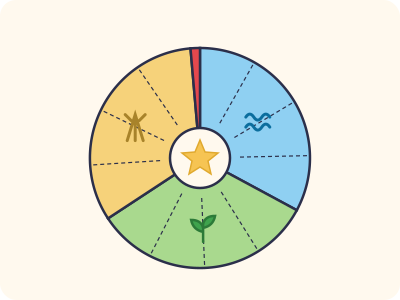
The Egyptian year had 12 months of 30 days plus 5 extra days. The real year is about day longer. After 40 years, by roughly how many days would this calendar fall behind the seasons?
- 40 days
- 160 days
- 5 days
- 10 days
Show the answer
D. 10 days
The calendar year is days. It loses day each year, so days assumes a whole day is lost each year, multiplies by 4 instead of dividing, and confuses the error with the 5 extra days. The calendar, based on the rising of Sirius (the Dog Star), had three seasons of four months: Inundation, Peret (growing) and Shemu (harvest).
Topics covered
- Writing and the historical period
- Before and after writing
- Writing in India
- Biological and cultural evolution
- Human ancestors
- Out of Africa
- Tools as extensions of the body
- Periods of early human history
- Archaeological layers
- Palaeolithic sites in India
- Mesolithic tools
- Middle Palaeolithic
- Upper Palaeolithic
- Rock art
- Mesolithic
- Neolithic revolution
- Transition to agriculture
- Mehrgarh
- Harappan timeline
- Early Harappan
- Kalibangan
- Harappan weights
- Harappan water management
- River-valley civilisations
- Contacts between civilisations
- Mesopotamian civilisation
- Sumerians
- Cuneiform
- Deciphering Egyptian writing
- Egyptian calendar
- Egyptian civilisation
- Egyptian society
- Pyramids
- Life in ancient Egypt
- Dates BCE
- Chinese civilisation
- Chinese writing