Journey Inside the Atom: CBSE Class 9 Chemistry practice questions
Practise 50 questions on Journey Inside the Atom, free, with an explanation for each answer.
Sample questions
Why are Bohr's shells named K, L, M, N… instead of starting from A?
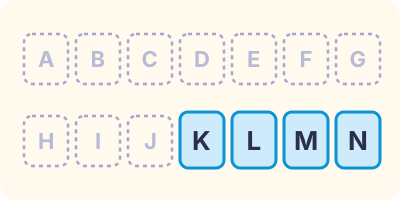
- K stands for 'kernel', another word for nucleus
- Bohr named them after the first letter of his teacher's name
- Barkla called the first X-ray line he found K, leaving earlier letters free; Bohr kept that notation
- Shells A to J are hidden inside the nucleus
Show the answer
C. Barkla called the first X-ray line he found K, leaving earlier letters free; Bohr kept that notation
Physicist Charles Barkla named the first X-ray line he observed K. He skipped A to J to leave room for any series found before it, though none ever was. Bohr adopted the same letters for atomic shells. The other options are made up.
Thomson always got the same kind of cathode rays. It did not matter which metal he used for the cathode or which gas filled the tube. What did this show?
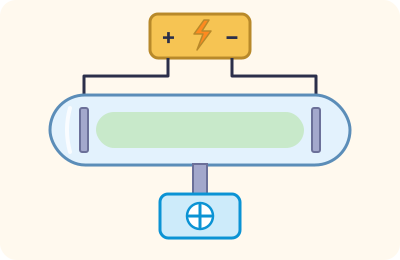
- Cathode rays come only from metals, not from gases
- Electrons are a basic part of the atoms of every element
- Atoms cannot be broken into smaller particles
- Cathode rays are streams of positively charged particles
Show the answer
B. Electrons are a basic part of the atoms of every element
Because the rays were the same for every cathode material and every gas, the particles in them, the electrons, must be a basic part of the atoms of every element. Bending the rays in electric and magnetic fields showed they are negatively charged and much lighter than atoms, so atoms are not indivisible. The electron's charge, , is taken as for convenience.
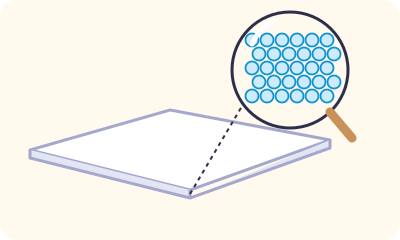
A sheet of card is thick. One atom is about across. Roughly how many atoms, placed one on top of another, would fit across the card's thickness?
Show the answer
D.
. Number of atoms , about 20 lakh. Leaving 0.2 in millimetres gives , and treating mm as (like cm) gives . Multiplying instead of dividing gives .
Topics covered
- Roots of atomic theory
- Discovery of the electron
- Thomson's model of an atom
- Gold foil experiment
- Rutherford's model of an atom
- Size of the atom and nucleus
- Limitations of Rutherford's model
- Bohr's model of the atom
- Distribution of electrons
- Discovery of the neutron
- Subatomic particles
- Scientists and their discoveries
- India's scientific contributions
- Symbols of elements
- Atomic number and mass number
- Electronic configuration
- Valency
- Mass of an atom
- Isotopes
- Uses of isotopes
- Average atomic mass
- Isotopes and isobars
- Development of atomic models
- Beyond the atomic models