Winds of Change: CBSE Class 9 English practice questions
Practise 50 questions on Winds of Change, free, with an explanation for each answer.
Sample questions
The word pankha comes from 'pankh', which means the feather of a bird. A small fan made of feathers was called a pankhi. According to the essay, where do we find proof of pankhis in India, and how old is it?
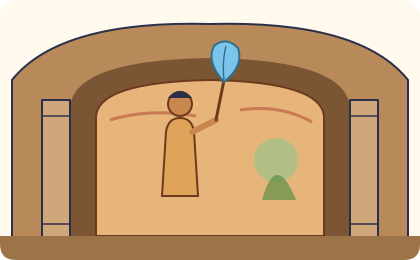
- In miniature paintings of royal courts, from the 2nd century BCE
- In Buddhist wall paintings at Ajanta, dating back to the 2nd century CE
- In stone carvings at Ajanta, dating back to the 12th century CE
- In embroidered cloth found in Kutch, from the 18th century CE
Show the answer
B. In Buddhist wall paintings at Ajanta, dating back to the 2nd century CE
The essay says the evidence of the pankhi is found in the Buddhist wall paintings at Ajanta, which date back to the 2nd century CE. It adds that the punkha also appears in embroidery, sculptures and carvings, but the dated evidence is the Ajanta paintings. The other options mix up the place, the art form or the century.
Why is 'Winds of Change' a suitable title for the essay?
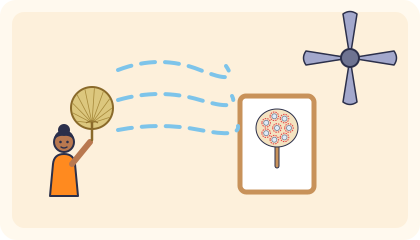
- Fans make wind, and the essay traces how the role of the pankha has changed over time
- It describes a storm that destroyed the villages of fan-makers
- It explains how the first electric fan was invented in India
- It tells how strong winds carried pankhas along the trade routes
Show the answer
A. Fans make wind, and the essay traces how the role of the pankha has changed over time
The title has a double meaning. Literally, a pankha creates wind. Figuratively, 'winds of change' are forces that transform things: the pankha moved from fanning kings and deities, to cultural trade goods, to decorative craft items and a commercial livelihood, and now faces the challenge of technology. No storm or invention is described, and goods travelled along trade routes, not on the wind.
Which detail from the essay best shows that a fan's design reflects the culture of its region?
- Pankhas varied in size from a tiny two-inch one to large ones.
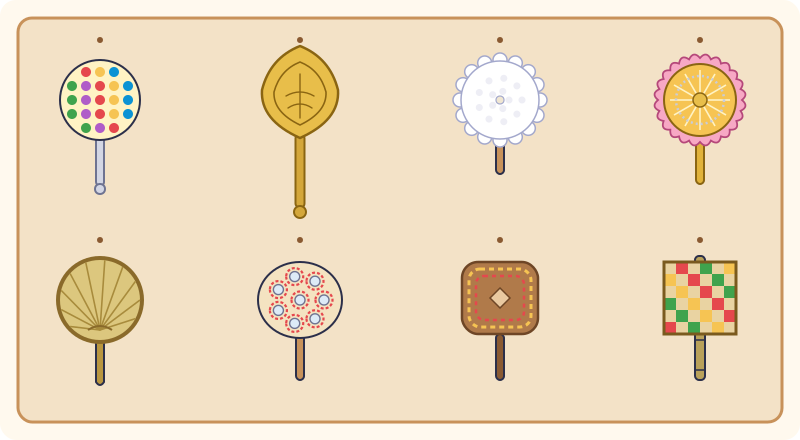
- Gujarat, the centre for bead craft in India, makes beads hand fans with colourful beads and a silver handle.
- Pankha is used to refer to all fans.
- With the advent of technology, the culture of pankhas runs the risk of losing its presence.
Show the answer
B. Gujarat, the centre for bead craft in India, makes beads hand fans with colourful beads and a silver handle.
Only option B ties a region's own craft tradition (Gujarat is the centre for bead craft) to the look of its fans. Size, the general meaning of the word 'pankha' and the threat from technology say nothing about a region's culture. Other good examples are the leather fans of Kutch and the sola fans of Bengal.
Topics covered
- Origin and early evidence of the pankha
- Rajasthan: temple hand fans
- West Bengal: sola fans
- Fans of different states
- Rajasthan: appliqué hand fan
- Tribal pankhas
- Regional variety of pankhas
- Pankhas then and now
- How the essay is organised
- Significance of the title
- Fact and opinion
- Preserving the craft
- Regional identity: evidence
- Vocabulary: words from the crafts fair
- Vocabulary: glossary words
- Word pairs: appearance, place, material
- Fixed expressions: picture meaning
- Fixed expressions with 'and'
- Collocations
- Present perfect: subject–verb agreement
- Present perfect: building a sentence
- Present perfect: spotting the verb
- Present perfect with past time words
- Present perfect for recent actions
- Present perfect: agreement rule
- Speaking: imagine you are a fan
- Writing: describing an artefact
- Writing: keep opinions out
- Speaking: expressing a preference
- Writing: a descriptive opening
- The Last Leaf: the doctor's worry
- The Last Leaf: what Johnsy counted
- The Last Leaf: Johnsy's feelings
- The Last Leaf: who said it?
- The Last Leaf: sequence of events
- The Last Leaf: the clues
- The Last Leaf: what the clues reveal
- The Last Leaf: Behrman's masterpiece
- The Last Leaf: Behrman's motive
- The Last Leaf: theme
- Canvas of Soil: rhyme scheme
- Canvas of Soil: poetic devices
- Canvas of Soil: stanza titles
- Canvas of Soil: metaphor
- Canvas of Soil: allegory
- Painting words: mural
- Toru Dutt's sonnet: the palms
- Toru Dutt's sonnet: the lotus
- Toru Dutt's sonnet: simile
- Toru Dutt's sonnet: order of images